Friday, 29 January 2010

Final Audience Feedback

We had a final screening of our media product where everyone in our media class got to see our finished piece. They were all given a sheet which consisted of questions that would allow me and my group to reflect on what we did well and what could have been done better.

Below are a few examples of feedback we received at the end of the screening.


Monday, 25 January 2010

New Filming/Editing Changes/Final Changes

Changes:
The main changes are based around the 2 aspects of filming and editing, and this blog entry shows the changes we have made.

Filming: the main filming needed was for our new scene which was flashbacks into Hannahs past and the things that have traumatised her. We also filmed a new classroom scene because from the feedback we got, we found that the classroom scene we already had was too long. There was one other scene that we added which was CCTV footage of Hannah being beaten up by her class mates and now that we were adding more scenes it would mean that we would need to take out some of our previous shots/scenes when it came to editing.

Editing: The first thing we did when it came to editing we needed to make sure that each shot we filmed for the 'Hannah' flashback' was edited to make it run well and create tension. The shots we got for our 'flashback' scene were:

  • Hannah being beaten up
  • Hannah in the toilet acting mentally unstable
  • Hannah walking into a room and closing the door
After the flashback we added the shot of Hannah going back into reality after her flashback and the audience is left in suspense about what is wrong with Hannah? Why she is acting so strange? etc. In video editor we made sure that it looked like a flashback so we made the whole scene black and white-this would make it easier for the audience to understand what is going on and for them to find the narrative easier to follow.

We took out our previous classroom scene and added the new classroom scene because it was shorter and more focused on our main character. The camera work was also a lot better the second time round and worked well with continuity. When we finished editing, we added our production sign as well as the title of our movie 'Behind close doors' and made sure all sound was working well and everything was ready for our final screening.

Monday, 18 January 2010

Creating our Production sign!


Here is our Production sign : 'Catch a Goat'

We decided to animate our production sign to make it more eye catching and appealing to our target audience. As a group we thought of what our production sign should look like and what it should represent. The Key elements that were needed to make our production sign in our opinions were:
  • Making it Unique
  • adding animation
  • Making it bold and eye catching
  • A meaning behind the production sign
Conclusion:
I am very pleased with the overall outcome of our production sign. I think that its creative and fun and adds a professional look to our final media product. As a group I think we thought of the idea really well and as Mergime used Flash to create it, I think that it stands out a lot more both visually and creatively.

Im not sure that there is a particular meaning behind our production sign, but I do think that it shows that we have worked with an open mind and full of ideas.

Friday, 15 January 2010

New story board!


This is our new storyboard with our new shots and scenes. This was something we felt we needed to do because of the changes we made. I think that it will really help us with being organized as well as making sure we are working well with timing!

Monday, 11 January 2010

Changes!

After getting our first audience feedback, there were certain things that were made clear about what was good and bad about our media product. The main things we picked up on were:

  • The narrative wasn't very understandable
  • Some scenes went on for too long (Classroom scene)
  • shots and scenes didn't work well together
As a new member of the group (Chantelle) joined, we all discussed our ideas and opinions about what we could do to improve what we have already. Our main idea was to:
  • cut and add more scenes - This was an idea in which we would change our story board and film new shots/scenes
  • use feedback to improve our work
During the final weeks of working, we would all work to make sure we completed all these changes. We now know that some more filming is needed as well as more editing and so we will continue to work to make sure we all share these responsibilities.

Monday, 14 December 2009

Editing: Day 3

Editing was a crucial part to making our shots all go together and flow perfectly to create a good outcome. Once again we all took it in turns to do some editing on a particular scene or shot. To have an effective outcome we needed to make sure we looked at diffferent aspects of editing, including:

  • Transitions from one shot/scene to another
  • Continuity editing
  • Sound
The scene that I edited was the 'Night scene'. As a group we started of by looking at the shots individually and making sure it was framed well. We then placed the shots together to create one scene. The key point in this was the continuity of the scene. If something wasn't working well then I would shorten a shot as well as adding a cut or fade to the shot.

One problem we had with the night scene was that the lighting - it was too dark and it was hard to see what was going on. With the editing software we managed to adjust the lighting and add a tone to the scene to make it more visible for the audience.

There was also a problem with sound as there was a part in the scene that had a sound that was very irritating and we would assume would have disrupted our audience. We adjusted the sound level in that particular shot and eventually we added our instrumental music to the scene. The instrumental music added more tension and created a more realistic opening scene.
The night scene came just after the production sign and so we added a 'fade in' transition so it didn't look like we jumped from one scene to the next and so it showed good continuity.


Friday, 11 December 2009

Over view of Filming: Day 2

The next day we all sat down and had a look at all the shots/scenes we captured on camera. My personal response:

What went well?
I think that team work was our high point during the filming of our media product. We all took it in turns to film a scene or shot and we managed to keep up with timing well. I also think that we were able to communicate well with each other when there were issues with filming or any other technical problems.

What could have been better? Were there any problems?
I don't think that there were many problems but I think we could have prepared things a lot better, especially with the props we were using, but apart from that I think everything ran really well and now that we are moving on to editing, I think that with the variety of shots we have taken, all will fall into place well.

Monday, 7 December 2009

Filming: Day 1

Today was our first day of filming. As a group we wanted to film as much as we could, especially because it was quite hard getting our main actress (Tegan) to come into school an act for us during our specific time schedules. I can definitely say that it was a very productive and successful day. Our day started of shooting the classroom scene*.

*Classroom scene: Hannah (Tegan Little) surrounded by her fellow class mates and a teacher (Mr.Unterhaulter) attempting to teach the misbehaving students.

Mergime and Louise decided to take it in turns to film this scene and we made sure we captured as many shots as possible so that when it came to editing we could then see which shot was best. We were able to capture a variety of shots including: Shot reverse shot, Match on action and an establishing shot. Once this scene was complete, we decided to film the 'friends confrontation' scene*.

*Friends confrontation scene: Two of Hannah' friends confront and question her about why she acts so strange.

This particular scene was quite simple to film but it involved steady camera work as we used a pan shot to film Hannah run out of the room. I think that this scene was overall very successful and I hope that when it comes to editing, we will be able to make it an effective scene in our media product.

Our final scene that we filmed was the 'night scene'*

*Night Scene: Hannah running away from police and her problems.

Me and Louise filmed the night scene together and found it very interesting. We used our storyboards to help us with the shots we used (Long shot, Birds eye shot etc). The only issue we had was the lighting - it was too dark and not all was visible in the shot. We decided that we would try and fix this issue when we started to edit and if it didn't work we would re-shot the scene.

Sunday, 29 November 2009

Equipment (Planning)

The main equipment needed for this project is:

  • Camera
  • Mini DV tape
  • Tripod - this will allow us to have steady and accurate shots.
  • Laptop (This will be needed when we upload all the footage we filmed and when we start editing all the shots).

Since there isn't a lot of dialogue in our script/Media product we will not be needing to use a microphone. If lighting becomes a problem we will use artificial lighting to make a shot more visible!

Saturday, 28 November 2009

Organising the shoot (Planning)

Organising the shoot involved making a lot of serious decisions that would end up helping us make our final opening sequence.
As a group we all organised the following:

Actors: Tegan Little as Hannah

Locations: Sydenham school (a classroom)
Kirkdale road (For the night scene)

Props: A fake knife, chairs and tables (classroom scene) etc.

Costume: casual teenage clothing to set up the story line.

Lighting: We will be using low key lighting mostly - reasons for this are because it suits the genre and the mood of the opening sequence. During the night scene we will use natural lighting to set the scene and if extra lighting is required, we will use some sort of artificial lighting to make the scene more visible.

Although these are rather brief details of us organising the shoot, I think it provides myself and my group with the key elements needed to make out final media product have a good outcome.


Friday, 27 November 2009

Shooting script (Planning)


Here is our shooting script. Using a shooting script will allow us to be organised as well as keeping up with timing and locations. I think that it will really help us understand what we are doing and keep us on track with filming.


Thursday, 26 November 2009

Soundtrack (Planning)

Before producing our media product we made sure we planned out what sounds we were going to use and in what shots/scenes we would use them in.

We will be using both Diegetic and Non diegetic sound. We will be using most of the non diegetic sound in opening scene and this non diegetic sound will consist of instrumental music in the background - it will help build up tension and excitement for the audience. The instrumental music will then continue into the next scene creating a sound bridge (this will be done when we start editing). We will also make sure that the instrumental music suits our chosen genre - Psychological thriller.

Another sound that is required is the sound of a heartbeat. This will be added during the flashback scenes, and once again it will help build up tension and add a sense of a thriller movie. Hopefully this will help attract the audience and keep them focused on the situation as well as creating enigmas throughout the scene.

Although there isn't a lot of dialogue in our media product, we do have a particular scene where Hannah (main character) is being beaten up by her class mates and they are shouting at her and swearing too. As a group we decided it would be best to let the actors improvise this scene to add a more realistic touch to the scene.


Wednesday, 25 November 2009

Decisions on Location (Planning)

As a group we all started discussing possible locations where we could film the opening scene of our short Film 'Behind Closed Doors'.

To make our decisions we had to base them on our storyboards and where we could visualize an effective outcome, that will captivate our target audience. As our storyline is based around the life of a teenage girl, who begins to suffer from paranoia we wanted to create a scary/thriller type scene.

When we looked back at our story boards we noticed that there are 3 main parts to the opening scene that need to be captured on camera. These 3 main parts were:
- Hannah Running on the street
- Hannah in School
- Hannah At home (Flashback)

As we have now seen the obvious locations that are needed, we are discussing where about we want to film. We certainly know that we want to film at school (Sydenham), but there is still a discussing as to where we will film the other 2 parts.
My Blog will be updated after proper analysis and decisions are made.


Thursday, 19 November 2009

StoryBoards and Animatics (Planning)


As we started to progress and develop ideas, we came to the point in which we started creating storyboards/animatics. We were given some post-stick notes to draw each shot that we would be using for the opening scene of our film. Louise, Megime and myself worked together and took it in turns to draw out a shot an write about things such as:
-Mise-en-scene

-Sound

-Camera Shot
-Any Dialogue
Creating a storyboard was very helpful, as we were able to put ideas on to paper and keep organised with each shot. It also provided a clearer view of what we would like to add into the scene or what we would like to take out.
As we finished of adding the final shot, we were asked to film and take pictures of each shot to create our animatics. To create our Animatics we will be using 'Movie Maker' as it provides us with different choice of effects, such as transitions from each shot (fade in, fade out etc). It also helps provide background music to add a better sense of creativity and technique. We have not yet completed the animatic but we are working on it during the next lesson and should be finished by then.


Wednesday, 18 November 2009

The Scenario (Planning)

The scenario we created for our project, was quite basic but it also had all the elements needed for a film:

Opening scene and Scenario

The opening scene which as a group we would film, was based around a young teenage girl who is running away from a problem she has got into. The opening scene would help build up enigmas for the audience as well as create suspense and a realisation of the situation. The situation in the Film is that the girl (Hannah) is running away from her foster parents who have mistreated her as well as the students in her school, over time Hannah starts to become mentally insane and suffers from anxiety and ends up killing her parents.

The Problem/The Situation
The problem revolves around a girl (Hannah) who is 15 and starts to become paranoid because of her class mates and foster parents behavior towards her. Hannah starts to get bullied and mistreated so she becomes mentally unstable and from that point on onwards the audience see Hannah get her revenge.


Questionnaires (Research)

As part of research and getting as much Audience feedback as possible, we all worked together to create a short questionnaire to get an insight on what people like in movies. The questionnaire consisted in the following questions:

1) What is your favorite genre?

2) Why does it appeal to you?

3) What do you expect in the opening sequence of a film?

4) What attracts you to movies:
a) Trailers b) Actors/Actresses c) Story line

5) What was the last movie you watched? What was the genre? Did you enjoy it?
If not - state why.

6) What genre is your least favorite?


According to the questionnaire, it seemed that the most popular genre of movie was Comedy and Thriller. We also understood that its the trailers and story line that catch peoples attention when watching a movie.

This questionnaire provides a better view of what people think, when it comes to their favorite type of movies and it will help us think carefully about creating a eye catching and interesting opening sequence.

Friday, 13 November 2009

Genre (Research)

After researching our influences, we all focused on the genre we had discussed before: Physiological thriller.

Looking at different movies as influences allowed me and my group to understand a genre in more detail. Our narrative would most certainly be thriller related and would surround a story line based around a teenager/teenagers - This then reinforces the idea that we would like to have a teenage cast with age range around: 15-17 years old, and the reasons for this is because we want to add more tension and build up more excitement in our opening sequence.

We really focused on thinking about our chosen genre and moved on to the convention of mise-en-scene. To build up an idea that our story line is teen related we want to base our opening sequence in a school and outdoors. Both diegetic and non diegetic sound will be used - Instrumental music will be used to build up a thriller theme and to add tension to the scenes we shoot. (This still needs to be looked at in more depth).

Camera work and editing will also need to be discussed in more detail especially when planning our shots and scenes properly after.


Thursday, 12 November 2009

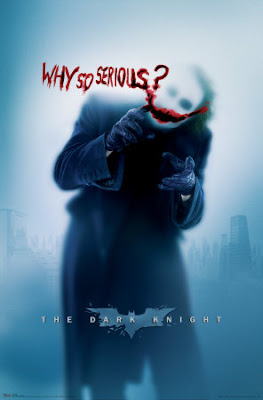
Analysing 'The Dark Knight' (Influences continued)


To help my coursework group with more Ideas we all individually looked at different films that involved the genre we were basing our work on (Thriller). I decided to look at the opening of 'The Dark Knight' and with that I made sure I got as much information as I could get out of it.

Institutional Context:
What Written Text (captions) is used in the sequence?
  • On the DVD menu ('play Movie', 'Scene Selection' and 'Languages')
  • Legendary Pictures
  • DC Comics
  • Warner.Bros Productions
What Information does it give the audience?
It tells and shows the audience that the movie is a big budget movie.

Why is it Important?
Once again it shows its a big budget movie, which is also an influence for an audience to watch a movie.

Which Film Company is used?
  • Warner.Bros Productions
  • A time Warner Company

Identifying Genre
What is the genre of the movie? (genres)
  • Horror
  • Action
  • Thriller

Is it a major genre, Sub Genre or Hybrid Genre?
  • Action/Thriller (Major Genre)
  • Horror (Sub-genre)

How is the genre constructed?
Mise-en-scene:
  • Setting: The city
  • Costume: Men in clown masks and suits (villains)
  • Props: Guns, Cars, Bags, Bombs etc.
  • Camera Work: Extreme Long shot, zoom in, tracking shot, crane shot
  • Sound: Non-diegetic (music), Diegetic (people screaming, dialogue)
  • Props: Guns, Cars, Bags, Bombs
  • Lighting: Natural Lighting and artificial lighting (high/low key)
Analysing continuity techniques:
Identify any examples of match on action, shot/reverse shot, synchronous sound?

Match on action was seen when characters opened doors and opening the vault.
Shot reverse shot was seen when 2 characters (villains) were having a conversation.

Synchronous sound: seen throughout opening scene!

Analysing Representation:
Which social groups are being represented in the sequence?
Middle class (villains, workers)

How are they represented?
Throughout the opening scene we see the city and then we see a bank with workers and villains robbing a bank (audience assume there is a purpose).

Identify any stereotypes and explain why they have been used?
working class people: sets the scene of a normal day that is soon taken over by a robbery.

Analysing the audience:
Who is the target audience for this film?
The certificate shows 12+ but it seems more like a 15-18 as there is a lot of violence and scenes that can cause disturbance towards the audience.

How have the producers of the film targeted this audience?
They have seen the amount of violence or threat shown in a movie and this helps understand a final idea of what the target audience is.